Posts

Beyond Celebrations, What Children Need to Learn About International Labour Day

Image
By Dickson Tumuramye Every year on May 1st, many countries celebrate International Labour Day or Workers' Day. This holiday is not just another public break from work or school; it is a time to appreciate the immense value of human effort, resilience, and dignity in the workforce. But while adults may understand this history, children often grow up seeing it as "just another day off." As parents or teachers, we have a unique opportunity and responsibility to teach our children what this day truly means and how it connects to their everyday lives and future roles in society. A History Rooted in Struggle and Justice International Labour Day originated in the late 19th century as a response to the harsh working conditions of the industrial age. Workers, including children, toiled for 12–16 hours a day with little pay and no legal protection. The labour movement, sparked by protests in places like Chicago, fought for basic rights: the 8-hour workday, fair wages, saf...

Protecting Our Children During Holidays

Image
  By Dickson Tumuramye As school holidays begin, many children will spend close to a month at home, in communities, or traveling to visit relatives and friends. While the break offers rest and rejuvenation, it also presents serious risks, especially when children are left unsupervised or exposed to unsafe environments. Some parents never take a keen interest in knowing how children are doing at home, especially when they leave in the hands of “trusted” caretakers. Yet we keep hearing a lot of confessions about what's going on under our roofs just because we simply think everything is okay. You don’t even bother to ask children, one-on-one, to narrate how they spent their day.   We need to ensure that our children are always safe, protected, and meaningfully engaged during this period, and that takes an extra effort for us to sit them down and always listen to them. It calls for our presence as well even when we may have other people around us to help us in the parenting pr...

Wanda: The Man Who Lived A Wonderful Life

Image
Over the years, I have been humbly honored by compliments acknowledging the above-average quality of my marital relationship with the man of my youth. This year, God willing, we will celebrate 15 remarkable years together. Such compliments are truly humbling, given that I and yours truly came not from your contemporary model household. Whereas I was raised by a single mother, hubby came from a polygamous family. Out of that dysfunctionality, God continues to amaze us with churning a beautiful story out of our previous rubble. A significant part of our journey has been shaped by the extraordinary people God placed in our path. Among them, Elder Charles John Wanda stands out. Charles John Wanda   Just ten days after our wedding in 2010, my husband and I relocated to Mukono, where I began my new role at Uganda Christian University. We settled in Kauga, near the majestic Blessed Christian Church. It was there that we met Elder Wanda—a tall, handsome, hardworking, soft-spoken man who...

How to Solve and Manage Family Conflicts

Image
By Dickson Tumuramye Every family faces challenges, and each family is unique in its own way. People have different perspectives and experiences, which means conflicts are sometimes inevitable. It is not easy for individuals to live together without disagreements, misunderstandings, or disputes. However, conflicts can be healthy when properly managed, as they help us recognize our strengths and weaknesses and can lead to personal and relational growth. One common mistake families make is avoiding conflict resolution or delaying addressing issues. Conflicts often arise from poor communication, jealousy, malice, backbiting, parental favoritism, income disparities, changes in status, unequal distribution of family property, sibling rivalry, and interference from in-laws. Strategies for Managing Family Conflicts Recognize the Problem The first step in managing family conflicts is to identify the root cause of the issue and acknowledge its impact. Family members must be willing to...

What Stakeholders Can Do to Understand the New Lower Secondary Curriculum

Image
  By Dickson Tumuramye When the Uganda Certificate of Education (UCE) results were released, I read a message on social media where a parent sent a message to a friend mistakenly thinking that his son had received Uganda Advanced Certificate of Education (UACE) results instead of UCE results. This confusion arose because many of us are accustomed to the grading system of the old curriculum, which used letter grades from D1 to F9, with a classification ranging from Grade One to Grade Four, and Grade U for failures. Previously, only UACE results followed a grading system from A to O or F. Under the new lower secondary curriculum, however, UCE grading now follows a scale from A to E, leading to widespread confusion among parents and learners. This misunderstanding is not an isolated case. Many parents and students were taken by surprise upon seeing the results of the lower secondary school curriculum. One parent, upon asking his child how he performed, was told that he was in first gr...

Balancing Discipline and Encouragement in Parenting

Image
By Dickson Tumuramye It’s common for children to error and annoy parents or teachers. As a result, some parents or teachers use either force or harsh words thinking they are disciplining a child and correcting them, directing them to the right path. They don’t realize that their discipline measures are more or less a punishment and their words affect the child emotionally and lowers their self-esteem. I trust no parent wants to raise a child with low self-esteem, full of fear and self-rejection. Such a child struggles a lot in life and you too struggle parenting this child but you never recognize the source of the problem. The problem could be you, and your disciplinary strategy and discouraging words. As the school term gains momentum, many parents find themselves caught between two extremes; being too strict or too lenient with their children for various reasons. It could be about homework, revision, night preps either at home or school, and chores among others. Striking a bala...

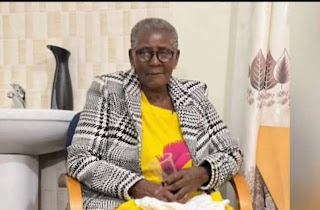
Mothered by the best: One Strand Gone

Image
  Fare thee well Aunt Hope The year was 1999. I was 15 years of age, in Form Three. Growing up, mine was a small world. I was the child trying to figure out life among adults. My mother parented me with the support of three bosom friends.  That inner circle has remained a constant over my short years on earth so far. Aunt Hope (who my mother fondly called Muramukazi meaning sister-in-law), Aunt Diana (Mrs. Tibenderana) and Nalongo (Maama Pat). Theirs was the friendship that the writer of the book of Proverbs probably meant when he wrote that there is a friend that sticks closer than a brother. I am yet to see a friendship so authentic, pure and royal. That fateful afternoon in 1999, Aunt Hope came to pick me from school. I was picked from class to go and receive my message from the Headmaster’s office. Abrupt messages from headteachers were usually not good news. Even as I dragged my feet to the Headmaster’s office, I wondered why of all students I had been singled out for...